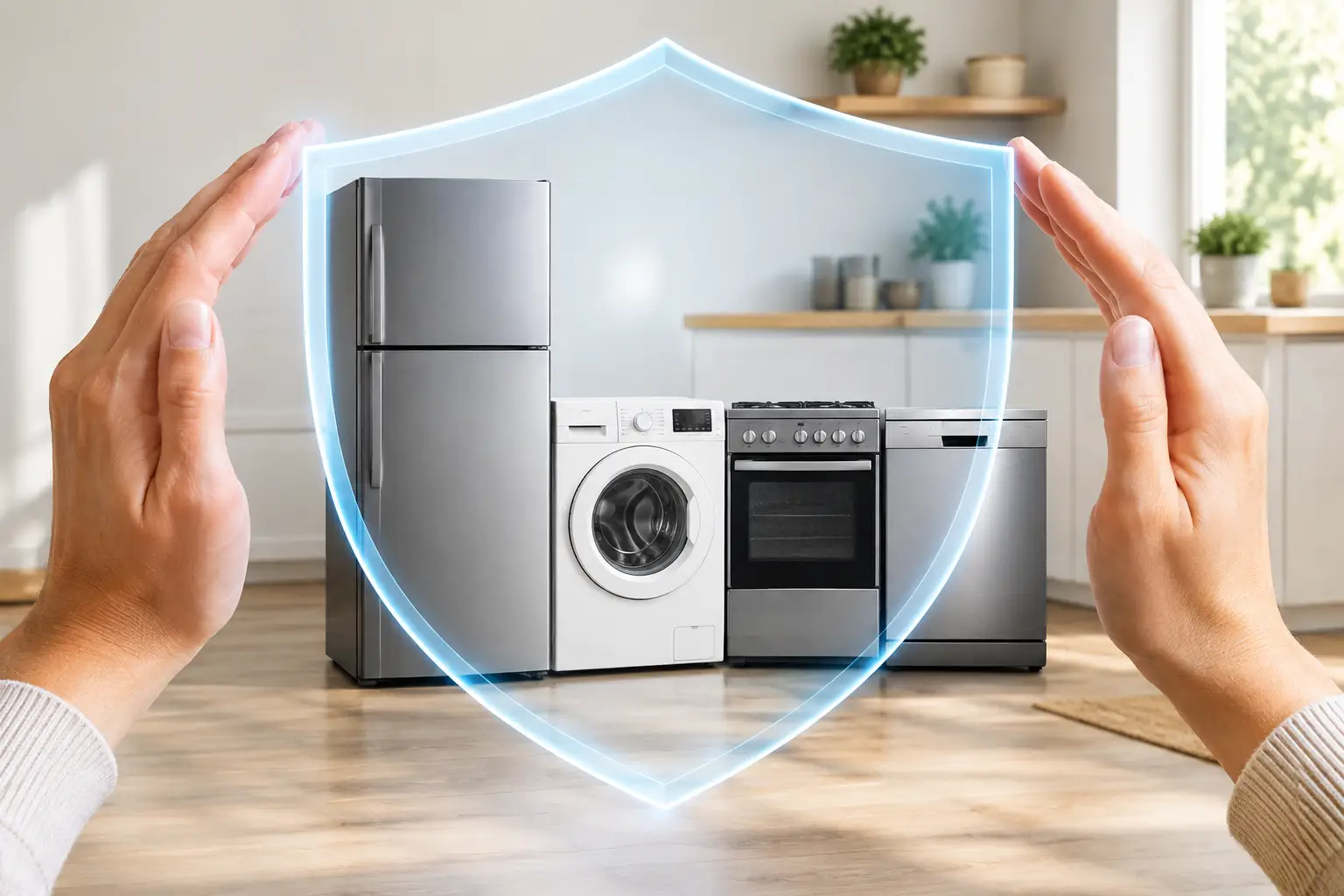
A 12-year-old refrigerator can keep working beautifully - until it does not. When the ice maker stops, the washer begins leaking, or the air conditioner quits during a heat wave, the best protection for aging appliances is not always the same policy or plan. It is a practical combination of knowing what you own, understanding what your current insurance does and does not cover, and choosing a repair strategy before a breakdown becomes an emergency. For many households, an unexpected appliance repair can strain a monthly budget. A little preparation helps you protect both your home and your peace of mind without paying for coverage that does not fit your situation. Why standard homeowners insurance usually is not enough Homeowners insurance is built to protect your house and belongings from sudden, covered events such as fire, lightning, theft, or certain types of water damage. If a covered peril damages an appliance, your policy may help, subject to your deductible and policy terms. But an appliance that fails because it is old, worn out, corroded, or poorly maintained is generally not a homeowners insurance claim. Normal wear and tear is expected, even when the timing feels anything but convenient. The same general idea applies to many renters policies, although coverage for appliances often belongs to the landlord rather than the tenant. That distinction matters. Filing a property claim for a relatively small appliance loss may also make little sense when the repair cost is below or close to your deductible. Home insurance remains essential protection for major losses, but it is not designed as a maintenance plan for an aging dishwasher or dryer. The best protection for aging appliances depends on the risk The right answer depends on the appliance, its age and condition, the cost of a repair, and how much financial surprise your household can comfortably absorb. In many cases, the strongest approach is a mix of maintenance, savings, and carefully selected service-contract coverage. Start with maintenance and prevention Maintenance will not make an old appliance new, but it can reduce preventable failures and help you spot trouble early. Clean refrigerator coils when recommended by the manufacturer, replace HVAC filters on schedule, keep dryer vents clear, and address small leaks or strange noises promptly. For washing machines, dishwasher hoses, and refrigerator water lines, inspect connections periodically. A failed hose can create water damage well beyond the cost of the appliance itself. If you plan to be away from home for an extended period, consider shutting off the water supply to appliances that use water when it is safe and appropriate to do so. Keep receipts for maintenance and repair work, along with model and serial numbers. This paperwork can be useful when comparing repair options, checking for recalls, or confirming whether any manufacturer coverage remains. Build an appliance repair fund A dedicated home repair fund is simple protection that gives you flexibility. Even a modest monthly contribution can help cover a service call, a replacement part, or the gap between what a plan pays and what you owe. This option is especially sensible if several appliances are already near the end of their typical useful lives. Rather than paying premiums for broad coverage you may not use, some homeowners prefer to save for the repairs they know may be coming. The trade-off is clear: you take on more of the financial risk yourself, so the fund needs to be available when a major system fails. Consider a home warranty or appliance protection plan A home warranty, sometimes called a home service contract, can help with the cost of repairing or replacing covered appliances and home systems that fail from normal use. Plans vary widely. Some focus on major kitchen and laundry appliances, while others can include systems such as heating, air conditioning, plumbing, and electrical components. For a family with an older refrigerator, range, dishwasher, washer, dryer, and HVAC equipment, a plan may make budgeting easier. Instead of facing the full cost of a covered repair at once, you typically pay a monthly or annual plan cost plus a service fee when you request help. The value depends on the contract, not just the price. Read the coverage limits, service fees, waiting period, and exclusions before enrolling. A plan may cap how much it pays for a particular appliance, exclude pre-existing conditions, or decline certain failures caused by lack of maintenance, improper installation, or code upgrades. It may also offer a replacement based on contract terms rather than allowing you to select any model you prefer. A home warranty can be a helpful budget tool, but it is not a substitute for homeowners insurance. The two products address different kinds of risk. When equipment breakdown coverage may help Some insurers offer equipment breakdown coverage as an endorsement to a homeowners policy. This coverage may respond to certain sudden mechanical or electrical failures, such as damage caused by a power surge or electrical arcing. It can be worth asking about if your home relies on connected appliances, smart systems, or expensive electronics. Still, equipment breakdown coverage usually does not cover gradual deterioration, rust, or ordinary aging. Think of it as protection for an unexpected internal failure, not a guarantee that an older appliance will be replaced when it simply reaches the end of its service life. Your deductible, coverage limit, and policy wording all matter. An independent agent can help you compare the cost of adding this coverage with the protection it may provide for your household. Compare the cost of repair with replacement Before purchasing a service contract or authorizing a major repair, get a written diagnosis from a qualified technician. Ask what failed, whether the repair is likely to extend the appliance's life, and whether other components show signs of wear. A repair is often worthwhile when the appliance has been reliable, the issue is isolated, and the repair cost is reasonable compared with a similar replacement. Replacement may be smarter when repairs are recurring, parts are difficult to find, or a newer model would offer meaningful gains in reliability, energy use, or safety. Do not base the decision on age alone. A well-maintained appliance can outlast an average lifespan, while a newer unit with a major sealed-system or control-board failure may be expensive to fix. Also consider the cost of delivery, installation, haul-away, electrical or plumbing updates, and possible cabinet or ventilation changes. Those expenses can turn a seemingly affordable replacement into a larger home project. Questions to ask before buying protection Whether you are considering a home warranty, an appliance-specific plan, or an insurance endorsement, ask direct questions. Which appliances and parts are covered? Is there a service-call fee? Are there payout caps? Does the plan cover removal and installation? Can you use your own repair professional? What happens if a matching replacement is unavailable? Also ask how claims are handled and how quickly a technician is typically assigned in your area. A lower price can be less valuable if a household has to wait too long for a refrigerator, furnace, or air conditioner repair. Clear answers now are far better than surprises during a breakdown. Protect the home around the appliance An appliance failure can become a property loss when water, smoke, or electrical damage spreads. Install water leak detectors near appliances with supply lines, use surge protection where appropriate, and make sure you know where your home's main water shutoff is located. Check that your homeowners coverage, deductible, and personal property limits still reflect the home and belongings you have today. Sincerity Insurance Solutions can help homeowners review available property insurance options and discuss whether equipment breakdown coverage or a home warranty may fit their needs and budget. Because coverage is never one-size-fits-all, the goal is to help you understand the choices before a broken appliance forces a rushed decision. The best time to make a plan is while the refrigerator is still cold and the washer is still running. A quick inventory, a realistic repair fund, and the right protection can give your family more control when an aging appliance finally asks for attention.